
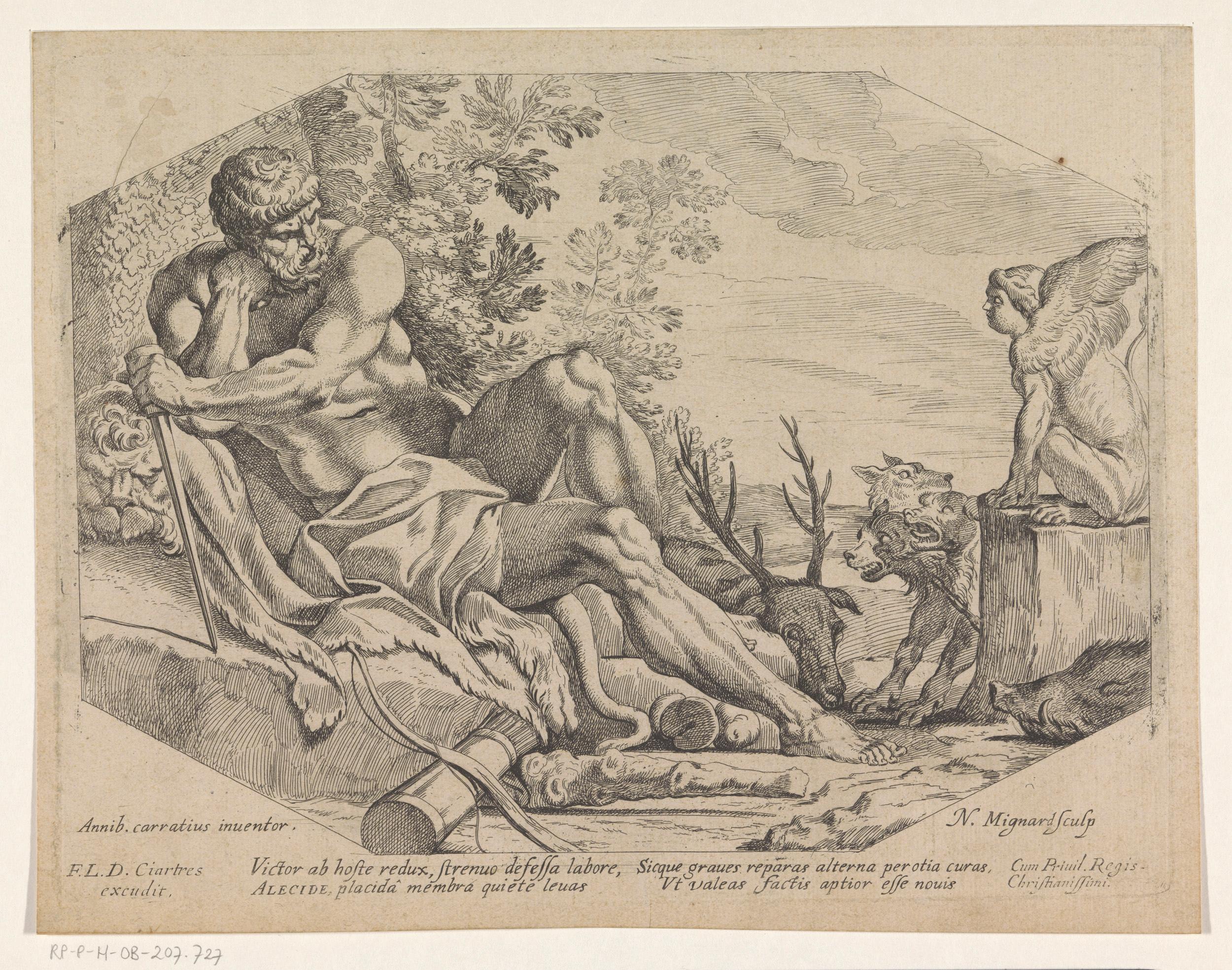
Hercules the Legend vs. Hercules the Opera
Ask ten people what “the story of Hercules” is, and you may get ten different answers. Ancient writers treated Hercules (Greek: Heracles) like a legend you could zoom in or out on: sometimes he is a monster-slayer doing public feats, and sometimes he is the center of a family tragedy.
Handel’s work (libretto by Thomas Broughton) is based mainly on Sophocles’ Women of Trachis and Book 9 of Ovid’s Metamorphoses.
Hercules of Legend: The Public Figure
The labors (lion, hydra, boar, and so on) are the Hercules most people recognize: feats performed under command mixing brute strength with endurance, cleverness, and sometimes help from others. Different ancient frameworks emphasize different meanings—punishment, purification, fame, or the hero as a boundary-crosser who goes “where humans shouldn’t go” (even down to the Underworld).
Handel’s Hercules: The Private Life.
The opera assumes all of that already happened. The drama begins when the hero comes home.
Hercules of Legend: The “poisoned gift”
In a key myth thread, the centaur Nessus tries to assault Dejanira. Hercules kills Nessus with an arrow poisoned with Hydra venom. As Nessus dies, he tricks Dejanira into keeping his blood (or a garment soaked in it) as a supposed love-charm to secure Hercules’ fidelity.
Handel’s Hercules: The "poisoned weapon"
Years later, Dejanira uses the garment, trying to save her marriage, and it becomes the instrument of Hercules’ agonizing death. The opera focuses less on myth and more on marital insecurity, misinformation, and the terrifying lag between action and consequence. It is also a story about persuasion: Nessus’s final lie weaponizes Dejanira’s love.
Hercules of Legend: Hercules
Mythic Hercules is often about Hercules.
Handel’s Hercules: Dejanira
The opera is arguably more about Dejanira, rather than Hercules. Hercules’ exploits are backstory; the opera zooms in on his wife’s psychology of suspicion and spiraling fear.
Mythic Hercules is often about strength against monsters. Handel’s Hercules is about something strength can’t fix: jealousy, rumor, and a single irreversible mistake—all staged inside a household that can’t survive the hero’s return.