
Holland Community Opera Fellowship Applications open Jan 1-31, 2027
Open to Teaching Artists of Any Discipline Connected to Opera
Teaching Artists of any discipline who have a connection to opera and are committed to engaging with the community are encouraged to apply for the Holland Community Opera Fellowship.
Launched in 2017, the Holland Community Opera Fellowship (HCOF) leads the opera field in civic practice, building deep relationships outside of the performance venues. Our team engages with the Omaha community each season, bringing artistry and community engagement skills to a variety of long-term and short-termco-created community-based programs. Programming is focused on creativity and inspiration with the art form of opera as a toolbox, not teaching opera. The elements of opera (drama, word, art, movement and music) are at the heart of all of our programming.
The primary qualities of a successful candidate include a strong interest in serving the community through the arts, at least 1-2 years of teaching artist experience, a strong connection to opera, a team oriented work style, and a collaborative and creative thinker. Opera Omaha values staff diversity that represents Omaha’s diverse communities and seeks candidates who reflect this value.
This full-time position will be for the 27/28 season.
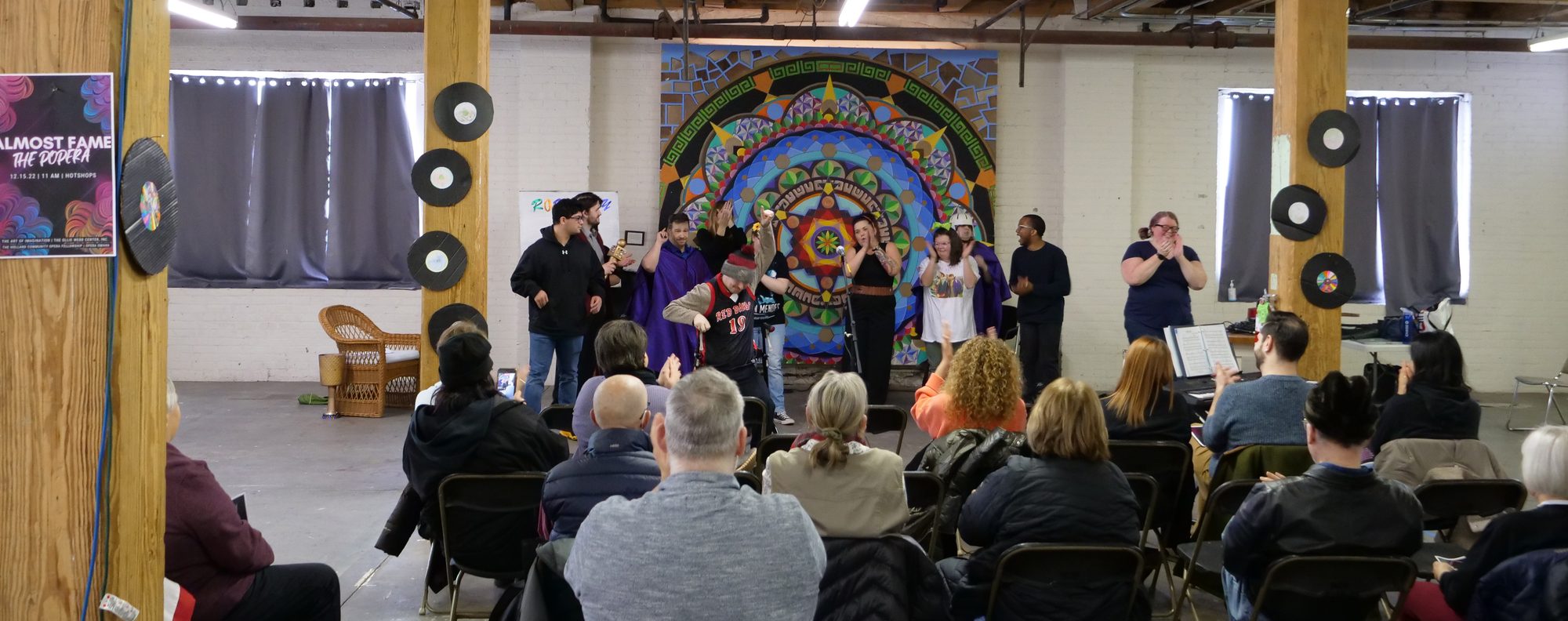
Fellows perform an original show with students from Ollie Webb Center, Inc’s Art of Imagination program.
Application Guidelines
The Application for the Holland Community Opera Fellowship is unique and made up of multiple elements. The goal of the Fellowship application is to get a sense of you as a teaching artist, artist, and person. Applicants are encouraged to review the following guidelines and FAQs closely before applying.
A full application consists of the following parts: Your Resume, Short Answer Questions, and Artistic Work Samples. Applications are only accepted via the online application form; no applications will be accepted via email.
Your Resume
Your resume should include:
- Work Experience, Volunteer Experience and/or Experience Working in and with Community
- Teaching or Teaching Artist Experience-Education and Training
- Artistic Training and Experience
- Language Skills
- Experience developing and teaching arts programming for community participants including youth, adults, and/or families.
- Experience working with the populations served by HCOF including adults, children ages 2-18 years, individuals with disabilities, seniors, immigrants and refugee populations, incarcerated youth, and/or adults experiencing homelessness.
Your Short Answer Questions
Please answer the following questions with a short response. One document should be uploaded that includes your response to each of these questions. Please use no more than 250 words per question.
- Why is making art in, with, and for the community important to you? Include at least one example of how you have demonstrated this.
- Describe the specific skills you have that make you an effective team member. How do these skills help you succeed in a professional, collaborative setting?
- Tell us about your interest in doing this type of work at an opera company. Be sure to include how your work and artistry connect to opera.
- One of our core program partners is Intercultural Senior Center. Intercultural Senior Center is a community center for older adults ages 50 and older, with on-site activities including but not limited to nutrition, education, exercise, and cultural events. The seniors are from different cultures and countries and may include immigrant and refugee populations. Keeping this population in mind, how would you utilize your skills to engage the seniors in a 90 minute, community based arts workshop that is rooted in opera?
Your Artistic Work Samples
Please submit no more than three artist work samples within one document. Please choose artistic samples that represent you as an artist and help us understand your artistry. Artistic Work samples should include and demonstrate:
- Your work as a teaching artist in the community.
- Your work as a professional artist.
Samples may include text, website links, PDFs, photographs, and/or video files. Please ensure any links included are accessible, able to be shared, and easily viewed. If the sample does not have a description provided, please feel free to add a short sentence or two to provide context. All work should be clearly labeled and attributed.
Please note: If more than three artistic work samples are submitted, only the first three will be reviewed and considered.
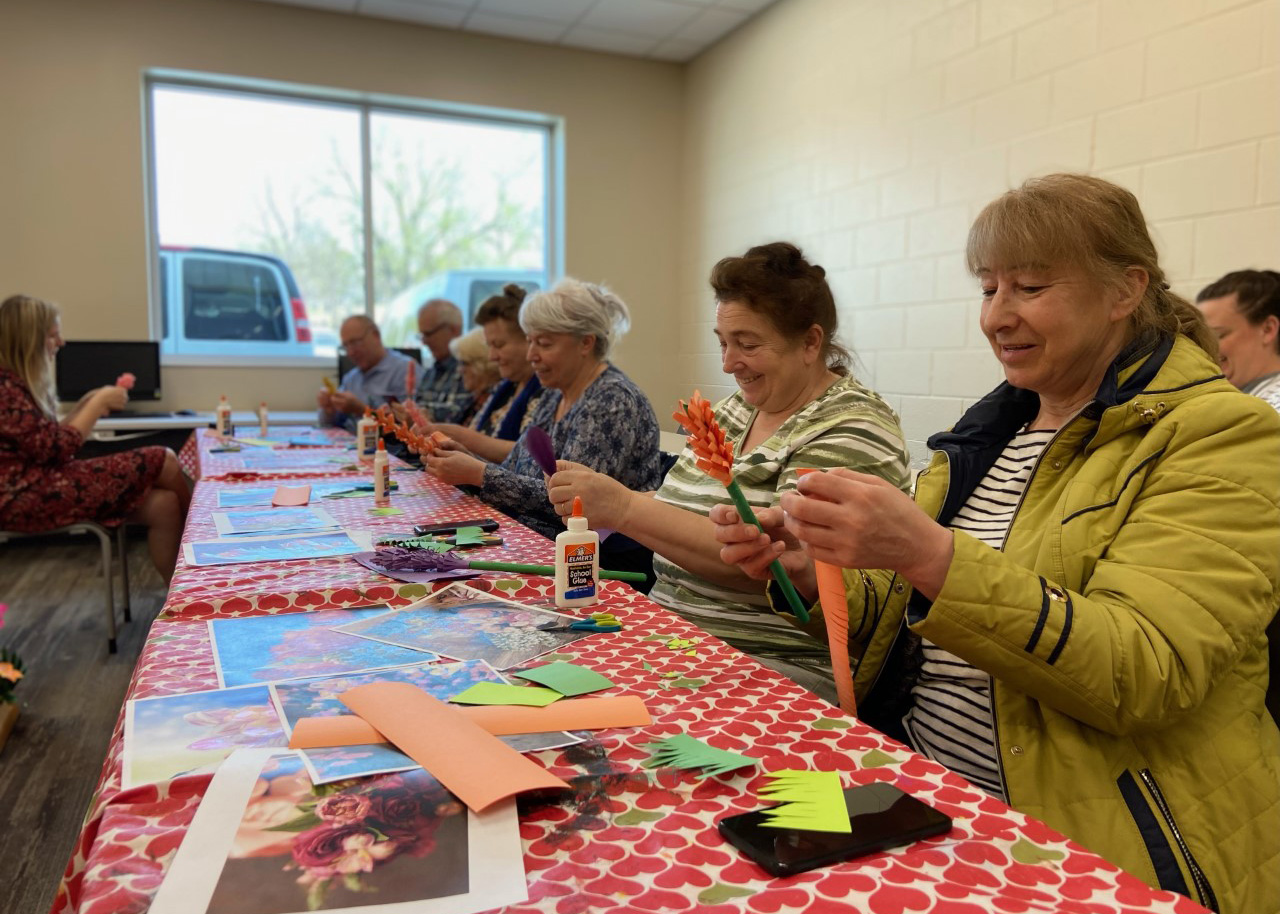
Ukrainian seniors from the Intercultural Senior Center prepare paper flowers and learn a new song in English with Fellows.
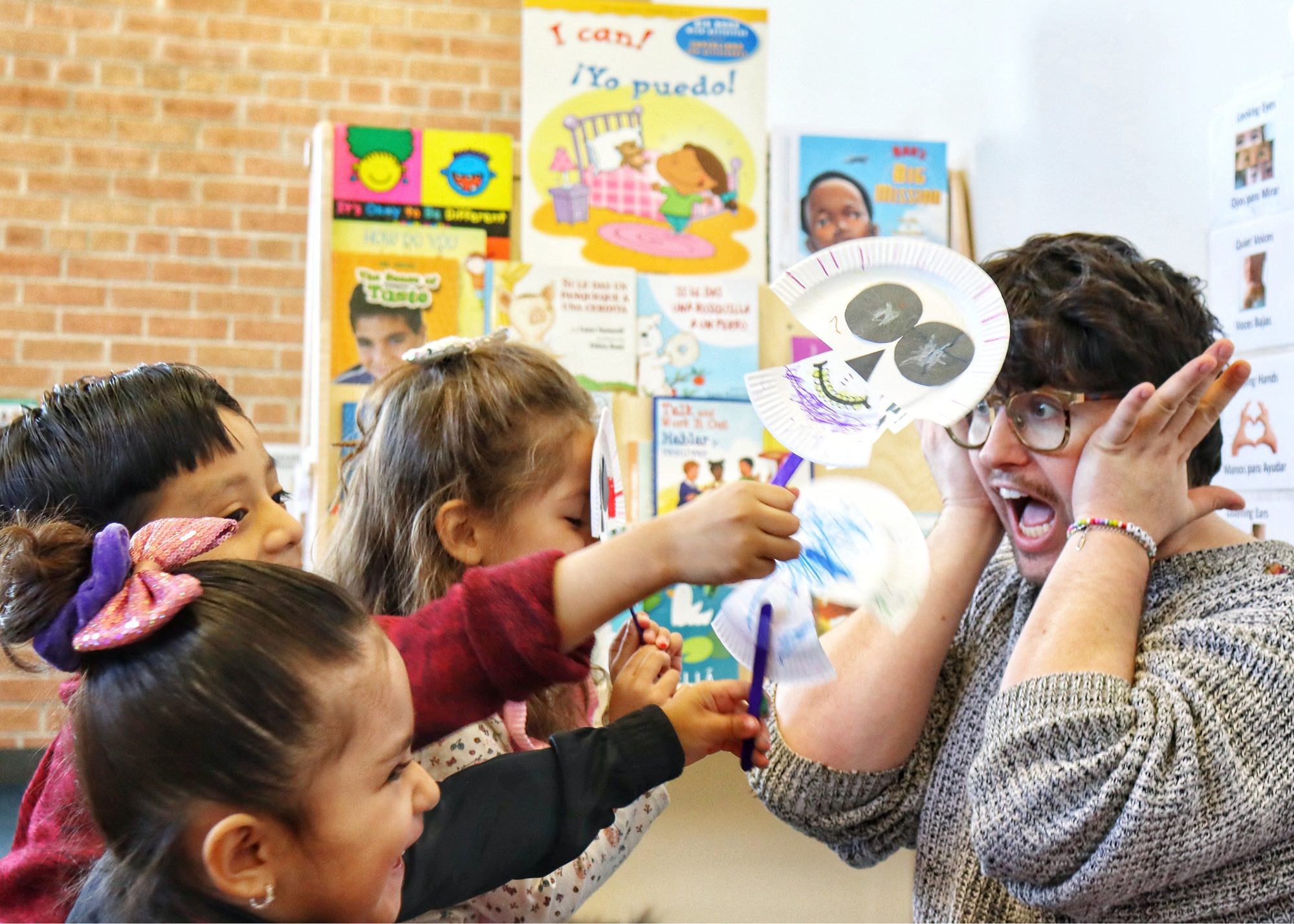
Preschoolers at the Learning Community Center of South Omaha participate in an active storytime, singing, dancing and making art with Fellows.
Frequently Asked Questions
Your resume should include things like your work and teaching experience, education and training, artistic training and experience, and language skills. Please highlight your experiences with the populations we serve including adults, children ages 2-18, individuals with disabilities, seniors, immigrants and refugees, youth who are incarcerated and adults experiencing homelessness.
Yes, experience can be considered in lieu of academic credentials.
This full-time position is for the 27/28 season
Yes. Fellows are expected to live in the Omaha metro area while on contract. Fellowship programming occurs at a variety of community partner sites across the Omaha metro. Other work occurs in the Opera Omaha office, which is located at 1850 Farnam St, Omaha, NE.
The Holland Community Opera Fellowship (HCOF) collaborates with more than a dozen partners across the Omaha metro area. HCOF helps community partners reach their goals as they serve their communities, including those who have limited access to arts programming and experiences.
In a given week, Fellows will:
- Plan community-based arts programming
- Participate in staff & community partner meetings
- Teach programming in the community—programming can be anywhere from a one-time event to weekly or monthly sessions, to a year-long project
- Reflect on their work in group and individual settings, considering what went well and how to grow.
- Take part in professional training (this may include artistic and non-artistic trainings).
- Deepen their civic practice and community engagement skills.
- Deepen their creative practice.
- Share their artistry with the community.
Programming is focused on creativity and inspiration with the art form of opera as a toolbox, not teaching opera. The elements of opera (drama, movement, music, visual art, and words) are at the heart of all of our programming.
Some examples of co-created programming with partners in the last year include:
- In collaboration with Fellows, Residents at QLI, a rehabilitation and residential center for individuals with traumatic brain and/or spinal cord injuries and conditions, created their own version of La Cenerentola! Residents developed an original character, learned about narration and puppetry in opera, sang choral music, and performed for invited guests.
- Workshops at MICAH House offer participants an opportunity to explore the elements of opera, while learning to see themselves as creative individuals! Participants in the women’s shelter program focused on the use of color, light, and sound to tell stories. Parents and young children have identified what they can use around them to be creative. For example, using recyclable materials to build masks that display a variety of emotions!
- Seniors from the Intercultural Senior Center explored art history and identified unique operas from each time period with Fellows. They enjoyed exploring the libretto, characters, music, and staging of each time period and finding connections to their own culture!
- Fellows support singers in Gotta Be Me, Inc’s Heartlight Choir as they rehearse for upcoming performances. The choir offers adults with all abilities a community and opportunity to learn music, sing together, and have fun!
- Creative storytime and art creation focused on celebrating culture andbilingual abilities with young children at the Learning Community Centerof South Omaha.
Fellows primarily work as a team. All programming in the Fellowship is facilitated by two or more Fellows. In addition, they work together to develop curriculum and activities informed by community partners. Fellows work closely with the Community Opera Fellowship Director evaluating and reflecting on the programs and day-to-day activities in the Fellowship. The ideal candidate has a strong sense of teamwork and desire to collaborate with other artists.
Opera Omaha works with each Fellow to identify ways to support their artistic growth and process. This may include finding opportunities to showcase their art through Opera Omaha programming, or connecting with local and regional artists and mentors across opera and/or other artistic fields.
Some recent examples include: a Fellow shadowing and learning from a contracted stage manager and props designer during Opera Outdoors, Fellows creating visual art pieces for Opera Omaha community art shows, and Fellows participating in ongoing coaching sessions with local artists and mentors!
The Fellow role is primarily a teaching-artist position. Due to this, roles in mainstage productions cannot be guaranteed. However, many other opportunities for performance are offered each season! While the specific opportunities may vary each year, Fellows have regularly performed in Opera Outdoors, community recitals including Gallery 1516 and the Poetry and Music Project, development and engagement events, and more.
Fellows are full time staff members with a salary of $43,260/year. Fellows also receive full-time staff benefits including medical, dental and life insurance, 403b retirement savings plan, flexible time off and holiday pay, and a professional development stipend.
A core component of the Fellowship is ongoing training and professional development, including both artistic and non-artistic opportunities. All Fellows participate in in-depth training during onboarding at the start of each Fellowship season in August. This time focuses on learning the role and preparing Fellows to work in the community with our various partners. Some topics we have recently offered include trauma informed care, cultural competency, person-first language, reflective practice, and civic practice in addition to specialized training from our community partners. In collaboration with the Community Opera Fellowship Director, each Fellow is also required to develop a unique Professional and Artistic Development plan each season.
Fellows receive a professional development stipend per season to use towards continuing education, artistic development, and/or professional development. Fellows work with the Community Opera Fellowship Director to create and implement a Professional Development Plan that is unique to their needs and goals. The use of funds must be approved and connected to the Professional Development Plan. Funds can be used for things such as classes and trainings, coachings or lessons, seminars, conferences, and travel and housing to and from said engagements.
Artistic Training opportunities are developed based on the needs of Fellows and may include coachings with Opera Omaha’s Head of Music, sessions with visiting guest artists, and connecting with artists and mentors across the opera field or other organizations here in Omaha.
Each Fellow has their own unique experience after their time with us. A few examples of next steps include accepting a position as a college level faculty, working as a teaching artist in their hometown, performing roles across the country with varying arts and opera organizations, and pursuing a graduate degree. The Fellowship does not place individuals in future roles or guarantee any future employment after a contract ends.
Civic practice draws on opera’s authentic creative assets to address public priorities and community needs. Projects are co-created with community partners or participants focusing creative practice on partners and participants’ self defined needs. We highly recommend reading Opera America’s “An Introduction to Civic Practice”.
What are Fellow alumni saying?
“Getting to be a fellow has helped me learn more about my art, collaborate more deeply with other artists, and even become more connected with the artist and writer I want to be in the future.”
—Fernando Antonio Montejano, Holland Community Opera Fellow 2020-2023
“Working with the Intercultural Senior Center has been one of my favorite memories. We explored conducting and it was so fun to see the seniors be curious and play!”
—Alejandra Sandoval-Montañez, Holland Community Opera Fellow, 2023-2025
—Jaime Marie Webb, Holland Community Opera Fellow, 2021-2023
“I really learned that my passion for community engagement can work on a professional level and be at the foundation of everything I do. The Fellowship really instilled that I can be committed to that no matter what avenue I’m in – performing, directing, or teaching.”
—Aiden James Poling, Holland Community Opera Fellow, 2024-2026
“This is a great job and there is a lot to learn if you are open to it, even if you have a lot of experience. Be open to learning and growing. Relationships with the HCOF team and our community partners are so important!”
Still have questions?
Please reach out to Community Opera Fellowship Director, Wendy Kaiser at wkaiser@operaomaha.org or 402-885-0850.